Table of Contents
Lifestyle upgrades are rarely framed like financial decisions. They are framed like progress.
A bigger flat.
A newer car.
More convenience.
Better type of experiences.
Each upgrade feels justified, especially when income increases. In the United States, lifestyle growth is often treated like the natural reward for hard working. If you earn more, you spend more. That feels fair.
But comfort is having one cost, and that cost is rarely obvious at that moment.
This article breaks down how lifestyle upgrades quietly turn into long-term liabilities, why they slow down wealth creation even for high earning people, and how the math exposes what comfort hides.
Why Lifestyle Upgrades Feel Harmless
Lifestyle upgrades usually arrive one at a time.
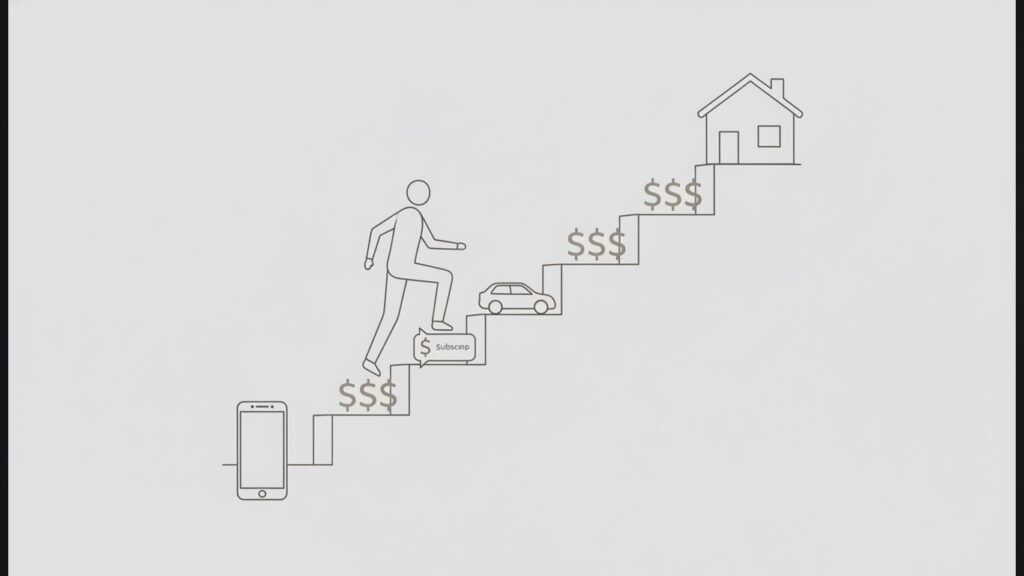
You do not upgrade everything at once. You upgrade gradually:
- A nicer place after a raise
- A better car when the old one feels outdated
- More subscriptions because they save time
- More convenience because life feels busy
Each decision feels reasonable on its own.
The danger is not the upgrade. It is the permanence.
Once upgraded, expenses rarely downgrade.
The Difference Between One-Time Purchases and Ongoing Commitments
Not all spending is equal.
A one-time expense:
- Happens once
- Has a fixed cost
- Does not repeat
A lifestyle upgrade usually creates:
- Monthly commitments
- Automatic renewals
- Long-term obligations
A higher rent is not just higher this month. It is higher every month, every year, often increasing with inflation.
This repetition is what turns comfort into a liability.
Lifestyle Inflation Is Not About Luxury
Lifestyle inflation is often misunderstood as luxury spending.
In reality, it is about normalization.
What once felt like a treat becomes a baseline.
Examples:
- Dining out becomes routine
- Premium services become default
- Convenience replaces planning
The spending does not feel excessive because it feels normal.
Normal is expensive when income growth slows.
The Compounding Cost of Comfort
Lifestyle upgrades compound in two ways.
First, they compound directly through recurring expenses.
Second, they compound indirectly by reducing what you can invest.
Every extra $500 per month in lifestyle costs is:
- $6,000 per year
- Tens of thousands over a decade
- Potentially hundreds of thousands in lost compounding
This cost does not show up as a bill. It shows up as slower progress.
Why High Earners Are Especially Vulnerable
Higher income creates a false sense of safety.
When income is strong:
- Expenses feel manageable
- Savings still happen
- Stress feels low
But higher income also enables larger fixed costs.
Big fixed costs reduce flexibility. When income fluctuates or slows, these commitments remain.
This is why many high earners feel financially constrained despite strong salaries.
Their lifestyle has grown faster than their margin.
Comfort Reduces Financial Optionality
Optionality is the ability to say no.
No to:
- A bad job situation
- An unhealthy work environment
- An opportunity that requires flexibility
Lifestyle upgrades reduce optionality by increasing required income.
When comfort depends on steady cash flow, freedom shrinks quietly.
Why Lifestyle Upgrades Feel Earned
Lifestyle spending often carries emotional justification.
“I worked hard for this.”
“I deserve a better quality of life.”
“I shouldn’t have to struggle anymore.”
These statements are not wrong. The issue is not reward. It is permanence.
A reward that repeats monthly stops being a reward and becomes an obligation.
Obligations demand income indefinitely.
The Trap of Fixed Costs
Fixed costs are the most dangerous form of lifestyle inflation.
They include:
- Rent or mortgage upgrades
- Car payments
- Insurance tied to asset upgrades
- Long-term service contracts
Fixed costs reduce adaptability.
Variable spending can be adjusted. Fixed costs cannot.
A lifestyle heavy on fixed costs requires constant income just to stand still.
Lifestyle Upgrades and the Illusion of Progress
Upgrading lifestyle feels like moving forward.
Better surroundings.
More comfort.
Less friction.
But financial progress is not about comfort today. It is about capability tomorrow.
If upgrades:
- Slow savings growth
- Delay investing
- Increase dependence on income
Then progress is cosmetic, not structural.
How Lifestyle Inflation Delays Wealth Without Pain
This is why lifestyle inflation is dangerous.
It does not hurt immediately.
Bills are paid. Life feels good. Nothing breaks.
The cost shows up later as:
- Slower net worth growth
- Delayed financial independence
- Reduced ability to handle disruptions
By the time it becomes visible, habits are entrenched.
The Opportunity Cost Most People Ignore
Every lifestyle upgrade has an alternative use for that money.
That alternative is usually:
- Investment
- Debt reduction
- Emergency resilience
Once money is allocated to comfort, it cannot do double duty.
Opportunity cost is invisible but relentless.
Why Downgrading Feels Like Failure
Once lifestyle upgrades are normalized, reversing them feels emotionally painful.
Downgrading feels like:
- Going backward
- Losing status
- Failing financially
This psychological barrier keeps people locked into choices that no longer serve them.
Upgrading is easy. Downgrading requires humility and intention.
Lifestyle Inflation Is a Time Problem, Not a Money Problem
The real danger is not regarding how much money you spend, but how long time you commit for spending that money.
A small upgrade which is maintained for decades can only cost more than one large one-time purchase.
Time always magnifies the comfort and converts it into one obligation.
When Lifestyle Upgrades Make Sense
Lifestyle upgrades are not inherently bad.
They make sense when:
- Income is stable and predictable
- Savings and investing are already automated
- Fixed costs remain proportionate
- Upgrades are chosen intentionally
The problem arises when upgrades happen automatically with income.
The Question That Exposes the Real Cost
Instead of asking:
“Can I afford this now?”
Ask:
“What future options does this remove?”
That question reframes lifestyle upgrades from emotion to strategy.
Final Thought
Comfort is not the enemy.
Unexamined comfort is only.
Lifestyle upgrades turn into long-term liabilities. Not because they are wrong thing. But because they are permanent, very silent, and rarely questioned by us.
When you are understanding the real cost of comfort, you stop upgrading by default action. You start upgrading by the design only.
That shift protects both your existing lifestyle and also your future, you see.
Related Analysis
How to Build a Monthly Budget Using the 50/30/20 Rule (With Real Examples)
February 13, 2026
The Psychology of Small Expenses: Why Daily Spending Hurts More Than Big Purchases
February 11, 2026
Why Two People With the Same Salary End Up With Very Different Net Worths: A Math-First Breakdown
February 9, 2026
Compounding Is Not Magic: It’s Just Time Doing the Heavy Lifting
February 7, 2026